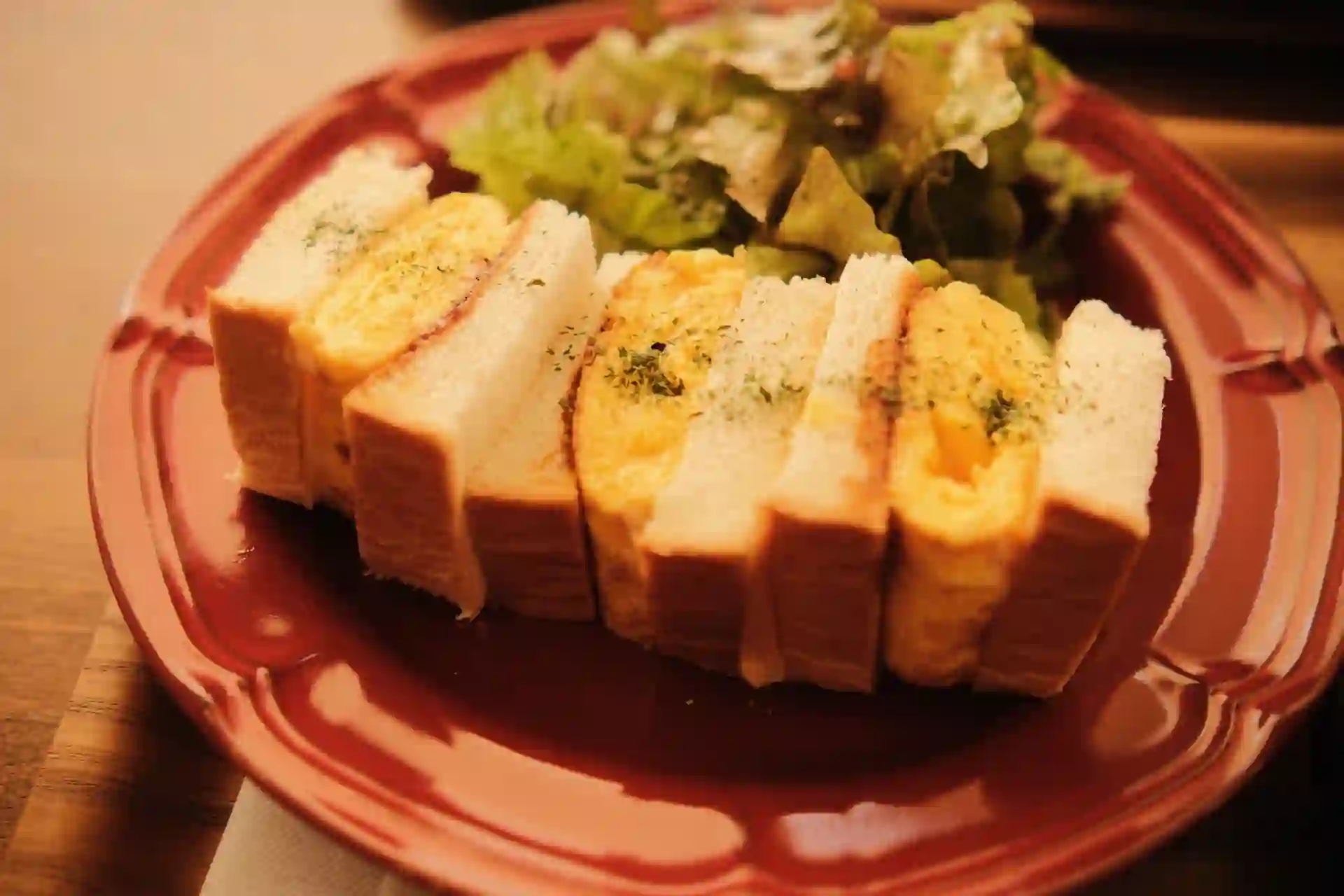
A Japanese tamago sando (egg salad sandwich) cut in half, showing the soft egg filling

Food

Tamago Sando Taste Test: Comparing Japan's Favorite Egg Sandwiches

From convenience store shelves to a legendary Ginza fruit parlor, tamago sando (Japanese egg salad sandwich) comes in more forms than you'd expect. Here's how the major versions actually compare.

It sounds like the most boring sandwich in the world: white bread, egg salad, crusts cut off. But tamago sando has a genuine cult following in Japan, and once you've had a good one, it's easy to understand why — the bread is impossibly soft, the egg filling is rich and custardy rather than watery, and the whole thing somehow tastes far more indulgent than "egg salad sandwich" implies.

Not all tamago sando are the same, though. The version from a convenience store, an old-school kissaten coffee shop, and a famous Ginza fruit parlor are genuinely different foods that happen to share a name. This is a guide to the main styles, so you know what you're actually comparing when you try one.

Quick Comparison

#NameLocationBest forTime
17-Eleven Tamago SandoBudget eating, Quick meals, Curious first-timers
2Lawson Tamago SandoBudget eating, Side-by-side comparison with 7-Eleven
3FamilyMart Tamago SandoBudget eating, Completing the convenience store trio
4Wako Ginza Tamago SandoTokyo, KantoA special-occasion food stop, Ginza sightseeing days, Understanding the high end of tamago sando30-45 minutes
5Kissaten-Style Tamago SandoSlow mornings, Retro atmosphere, Coffee lovers30-60 minutes
6Depachika Tamago SandoCurated quality without a sit-down meal, Combining with department store shopping, Picnic-style eating
7Bonus: Komeda Coffee Tamago SandoGreat value, A comfortable place to actually sit and relax, Bigger appetites

Where These Are

Kanto — Tokyo
7-Eleven Tamago Sando

#1

7-Eleven Tamago Sandoセブン-イレブン たまごサンド

Widely considered the benchmark for convenience store tamago sando, and often cited as one of the better fast, cheap meals in the country. It's the version most first-time visitors stumble into by accident — and are then surprised by.

Best for
Budget eating, Quick meals, Curious first-timers

Highlights

  • Very soft, slightly sweet milk bread
  • A mix of chopped egg and a smoother egg-mayonnaise layer for texture contrast
  • Sold cold, refrigerated, at every 7-Eleven location

Cultural notes

Konbini (convenience store) food culture in Japan is taken seriously — quality control and product development for items like this are genuinely rigorous, which is part of why the results are better than "gas station sandwich" expectations from other countries.

Travel tips

Available at any 7-Eleven, any time of day. No planning required — this is the easiest item on this list to actually try.
Lawson Tamago Sando

#2

Lawson Tamago Sandoローソン たまごサンド

Lawson's version tends to lean sweeter on the bread and richer on the filling than 7-Eleven's, and has its own dedicated fanbase who prefer it specifically for that reason.

Best for
Budget eating, Side-by-side comparison with 7-Eleven

Highlights

  • Noticeably eggier, richer filling
  • Slightly sweeter bread than most competitors

Cultural notes

Comparing convenience store chains' takes on the same item (onigiri, sandwiches, fried chicken) is a genuine, mainstream pastime in Japan, covered regularly by food media and taste-test videos.

Travel tips

Lawson is slightly less ubiquitous outside major cities than 7-Eleven, but still very widely available.

FamilyMart Tamago Sando

#3

FamilyMart Tamago Sandoファミリーマート たまごサンド

FamilyMart rounds out the "big three" convenience store chains, with a version that's often described as sitting between 7-Eleven's and Lawson's — a reasonable middle ground if you're doing your own comparison.

Best for
Budget eating, Completing the convenience store trio

Highlights

  • A more finely chopped, uniform egg filling than some competitors
  • Consistent, mild flavor

Travel tips

If you're doing a genuine side-by-side taste test, buying all three convenience store versions on the same day is the way locals sometimes settle the debate themselves.

Wako Ginza Tamago Sando

#4

Wako Ginza Tamago Sando和光 銀座 たまごサンド

Tokyo · Kanto

The famous "luxury" tamago sando, served at a high-end fruit parlor in Ginza. It's built around a thick, almost custard-like egg filling and is treated as a genuine treat rather than a quick meal — this is the opposite end of the spectrum from the convenience store versions above.

Best for
A special-occasion food stop, Ginza sightseeing days, Understanding the high end of tamago sando
Suggested time
30-45 minutes

Highlights

  • A noticeably thicker, more custard-like egg filling than any convenience store version
  • Considered a genuine dessert-adjacent treat, not a quick lunch
  • Located inside a long-established Ginza fruit parlor known for premium fruit desserts generally

Cultural notes

Fruit parlors (kudamono-ya or fruit parlors attached to high-end fruit shops) are a distinctly Japanese institution — premium fruit is treated as a luxury gift item, and the parlors attached to fruit shops serve elevated versions of otherwise humble foods.

Travel tips

This is a sit-down, paid experience rather than a grab-and-go item — expect to wait, especially at peak times, and check current hours before making it the centerpiece of a Ginza visit.

Nearby: Ginza shopping district, Tsukiji Outer Market

Kissaten-Style Tamago Sando

#5

Kissaten-Style Tamago Sando喫茶店の たまごサンド

Kissaten are old-school Japanese coffee shops, often family-run and decades old, with a retro atmosphere and a menu that barely changes. Their tamago sando tends to be thick-cut, generously portioned, and served with strong drip coffee — a completely different experience from a quick convenience store stop.

Best for
Slow mornings, Retro atmosphere, Coffee lovers
Suggested time
30-60 minutes

Highlights

  • Thicker bread and a more generous egg filling than convenience store versions
  • Often served alongside strong, siphon-brewed or drip coffee
  • The kissaten atmosphere itself — vinyl booths, jazz or classical music, unhurried service

Cultural notes

Kissaten culture has been gradually shrinking for decades as newer cafe chains expand, which has made visiting a genuine, long-running kissaten feel like a small piece of living history to many visitors and locals alike.

Travel tips

These are independent, individual shops rather than a chain, so there's no single specific address to point to — look for kissaten in older neighborhoods of any city, particularly around Tokyo's Ginza, Jimbocho, and Kyoto's older districts.

Depachika Tamago Sando

#6

Depachika Tamago Sandoデパ地下の たまごサンド

Depachika are the elaborate food halls in the basement of Japanese department stores, and they typically carry a curated, higher-end selection of sandwiches from well-regarded delis and bakeries — a good middle ground between convenience store and sit-down luxury.

Best for
Curated quality without a sit-down meal, Combining with department store shopping, Picnic-style eating

Highlights

  • A wider variety of tamago sando styles than any single convenience store
  • Generally higher ingredient quality than convenience store versions
  • Beautifully packaged, often designed as a gift-quality item

Cultural notes

Depachika reflect a broader Japanese retail philosophy around food presentation and gifting — even a sandwich can be packaged with real care.

Travel tips

Major department stores in any large city (Tokyo, Osaka, Nagoya, and beyond) have a depachika floor, usually in the basement, as indicated by directory signage near the entrance.

Bonus: Komeda Coffee Tamago Sando

#7

Bonus: Komeda Coffee Tamago Sandoコメダ珈琲店 たまごサンド

Komeda Coffee is a coffee shop chain built around the idea of being a comfortable place to sit for a while, not just grab a drink — deep booth seating, plenty of space between tables, and a genuinely unhurried atmosphere. The tamago sando fits that same philosophy: it's noticeably larger and more generously filled than what the price suggests, to the point that regulars half-jokingly call it a "reverse scam" — you consistently feel like you got more than you paid for.

Best for
Great value, A comfortable place to actually sit and relax, Bigger appetites

Highlights

  • A thick, generous egg filling that over-delivers relative to the price
  • Wide, deep booth seating designed for lingering rather than turning tables quickly
  • Part of Komeda's broader "morning service" culture, where a coffee order can come with a free light food item before late morning

Cultural notes

Komeda originated in Nagoya, a city with its own distinct and much-loved cafe culture (see our food regions guide for more on "Nagoya meshi"). The chain has since expanded nationwide, bringing that unhurried, generous-portion sensibility with it.

Travel tips

Komeda locations are common in suburban and roadside areas as well as cities, making it a good stop if you're road-tripping or based outside the biggest city centers.

Table of Contents

Who This Comparison Is For

This is for anyone who wants to understand why a “boring” sandwich has such a devoted following in Japan, and who wants to actually taste the range of what tamago sando can be rather than trying just one version and assuming that’s the whole story.

How These Compare

These versions sit on a rough spectrum from fast-and-cheap to slow-and-indulgent:

  • Convenience store (7-Eleven, Lawson, FamilyMart): The everyday version. Cheap, consistent, available anywhere, and a genuinely good introduction.
  • Depachika: A step up in ingredient quality and variety, still grab-and-go, found in department store basements.
  • Komeda Coffee (bonus pick): Not about luxury, but about value — a generously sized sandwich in a genuinely comfortable place to sit and eat it, without rushing.
  • Kissaten: A sit-down experience built around atmosphere and unhurried coffee as much as the sandwich itself.
  • Wako Ginza: The luxury end — a dessert-like treat rather than a meal, in a class of its own.

Prices, exact ingredients, and availability change over time and by location. Treat the descriptions above as general character sketches of each style rather than a guarantee of what you’ll get on any specific visit.

Practical Tips

  • If you want to do a genuine side-by-side comparison, buy the three convenience store versions on the same day — this is a common, low-effort way locals settle the debate themselves.
  • Convenience store tamago sando is refrigerated and meant to be eaten same-day; it’s a reliable, portable option for train rides and quick lunches while sightseeing.
  • For the Wako Ginza experience, treat it as a planned stop rather than something to fit in on the way to somewhere else.

For more on Japan’s regional food identity beyond this one sandwich, see our guide to Japan’s best food regions, and for general dining etiquette, our guide to Japanese culture and manners.

Frequently Asked Questions

What exactly is in a tamago sando?

At its simplest, it's egg salad (hard-boiled or a soft-cooked egg mixture) between two slices of soft, crustless white bread, usually with Japanese mayonnaise. Higher-end versions use a thicker, custard-like egg preparation rather than chopped hard-boiled egg.

Which version should I try first?

A convenience store version (7-Eleven is the most commonly recommended starting point) is the easiest and cheapest way to understand the basic appeal, since you'll find one within a few minutes almost anywhere. Save the Ginza fruit parlor version for when you want a sit-down treat rather than a quick bite.

Is tamago sando the same as a regular egg salad sandwich?

Conceptually yes, but the bread (Japanese milk bread, or shokupan) and the typically richer, mayonnaise-forward filling give it a noticeably different texture and flavor than a typical Western egg salad sandwich.

Can I find tamago sando outside Japan?

Japanese-style sandwich shops and some Asian grocery store delis in other countries have started carrying versions inspired by it, but the convenience store and kissaten versions described here are specific to Japan.

Written by a native of Japan

Know Before You Go

A few things a local would want you to know before your trip — manners, culture, and a few useful phrases, plus an honest take on what's genuinely great (and not so great) about traveling here.

Read the Full Guide

Comments

Comments are reviewed before they appear — yours won't show up immediately, but we do read every one.

Loading comments…